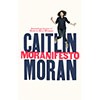
“A Thinker's guide to Life, the Universe and Everything”
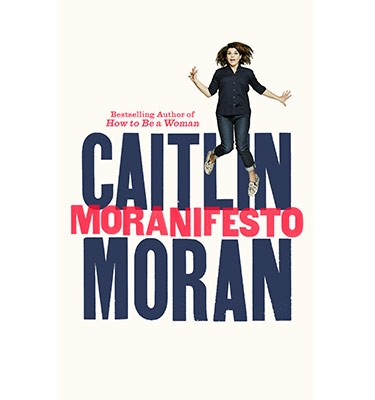
I agreed with so much that Caitlin Moran wrote – she can certainly rant with the best of people. Her rants were my rants – but much better formulated. I kept thinking that I want to write like Caitlin Moran when I grow up – but that is not about to happen, since I am already thirteen years her senior.
Like her, I loved “Cucumber” and Russel T Davies, the London Olympics, especially the opening ceremony (“then it started – started with that astonishing, febrile, kinetic, cloud-burst Opening Ceremony, which kind of … reinvented Britain”) and adore David Bowie. David Bowie made his presence felt throughout the book. He symbolised everything positive in the world today, a beacon of hope for all who feel in any way marginalised: “When in doubt, listen to David Bowie. In 1968, Bowie was a gay, ginger, bonk-eyed, snaggle-toothed freak walking around south London in a dress, being shouted at by thugs. Four years later, he was still exactly that – but everyone else wanted to be like him”. I almost burst into tears when one of her reasons “why the future will be better that the past” was “2) David Bowie might play live again”.
Her chapter entitled “All the Lists of my Life” was gold-dust. I particularly liked “Things Cookery Books Never Tell You”, and had to read them out to my husband, who has until recently always believed in the timings given by recipes – despite all evidence to the contrary.
Caitlin Moran seems to deal with every issue that is important to being an intelligent, caring human in today’s world: feminism (“If there’s something which is making life difficult for women, then this is something that is, most assuredly, making it difficult for everyone else in the world, too”); politics (“Educating yourself into being the third most glorious thing on Earth, after ‘mid-September sunshine’ and ‘David Bowie’: an informed and motivated voter”); capitalism, socialism and the welfare state; rules for campaigning for a better world (“All the answers will never come in one person. The future is a communal effort – like a patchwork quilt”); the importance of idealism and dreams (“if we are too afraid to state our dreams – to even begin to sketch out possible futures – then we have begun to disinvent the greatest facility humans have: to invent better”); TV (“I don’t think I can see any more sex-workers being beaten, tortured or murdered. … As a female viewer, it’s doing my head in”) and films; growing old (“I love getting older. You might lose skin elasticity, but you also lose the amount of f***s you give. It’s awesome”); and the incomparable joy of reading (“Being a reader. The unseen, life-changing duet you sing with anyone who’s ever written a book”).
There are so many apposite quotes. I had to send my sister the one on “Frozen”: “Boys may come and boys may go, Frozen told its millions of young, female fans, but your brilliant, idiot, annoying, amazing sister – she’s there for life”.
While you may not agree with everything that Moran writes, you are compelled to at least give her ideas serious consideration. She states “even though I have written a manifesto … what I’ve tried to do here is … start a conversation, instead”. The world will certainly be a better place if people join with her in this conversation. Thank you, Caitlin Moran, for this invitation to communicate.
PS: any *** are down to me.
I received this copy from the publisher via NetGalley in exchange for an honest review
Hardback edition
This reviewer received a free of charge product for review.