“Fascinating slice of US history, as relevant as ever!”
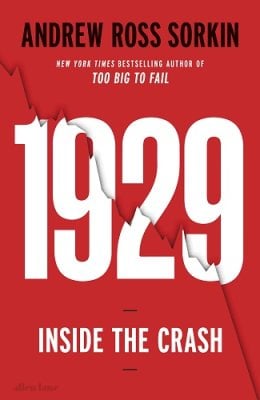
A strong 4.5 stars for me. In the acknowledgements, Sorkin says he wanted to write “...a fly-on-the-wall narrative that immerses readers in the moment.” He pretty much nails it with 1929. Meticulously researched, you get a brilliant sense of the era and its big players, the buildup to the Crash, and its consequences for individuals, the US economy, and legislation. Sorkin doesn’t bog you down with financial detail - he gives you enough to get the gist - but this is very much about characters and events, which is perfect for me.
A prologue sets the scene at the Crash’s ‘peak’ in late October 1929, with a taste of the desperate measures bankers consider to stabilise the market. The book then splits into two parts: Part 1 returns to the start of 1929, leading up to the Crash itself, and its immediate aftermath. Each chapter deals with a specific date. The first 200 pages or so establish the main characters at play, from presidents and politicians, astrologists and actors, to bankers and business leaders. It feels like the latter can do no wrong, with markets and wealth on the up and up, these people almost have the aura of movie stars. Fortunately, a cast of characters is included, as there are a lot of names, but there’s only a core group you really need to take note of. Pre-Crash life is given colourful detail; you feel the optimism, wealth, and belief in financial progress. The lower classes are persuaded to take loans so they too can invest. The markets are sold as another invention, with the potential to make everyone’s lives better, but sadly, small investors don’t have the benefit of hindsight that we do; they can’t see the risks, and that only an elite few are in control. The Crash itself is suitably dramatic, with memorable descriptions of the ensuing panic, and I was worried Part 2 might feel a slow contrast, jumping to nearly a year later. But the drama continues with attempts to call people to account, and it kept my attention all the way to the end.
Couple of notes:
* The photos (which add a lot, putting faces to names) appear near the beginning of Part 2; the last couple of photos contain spoilers for events later in the book!
* A reference graphic, like a graph of the Dow Jones over the entire period, might have been helpful. Chapters often mentioned how much it had fallen on a particular day, but I would have liked to see this in context.
* I’m not sure what Winston Churchill added to proceedings, apart from name-dropping, but he’s entertaining enough.
* The only other thing I would have been interested in is some named working-class POVs. But I appreciate that research relies on available material, which naturally comes from diaries and papers, more likely to be kept by the powerful and wealthy.
I’m nitpicking, though. Sorkin’s 1929 is a fascinating slice of American history, about an event that I was aware of but knew little about. With repercussions that impact modern times, this is as relevant as ever. The ties between politics and money, the necessity of spinning your own narrative. 1929 will intrigue those with an interest in history, finance, economics, politics and communications, but also anyone interested in people and psychology. That a banker has to consider how he carries himself when he walks to work, in case it affects the markets, tells you a lot about the way things work. Recommended.
Hardback edition
This reviewer received a free of charge product for review.