“A melancholy Weird”
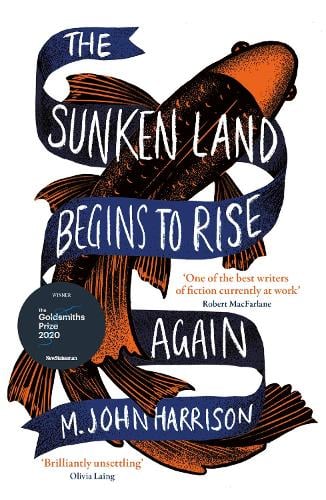
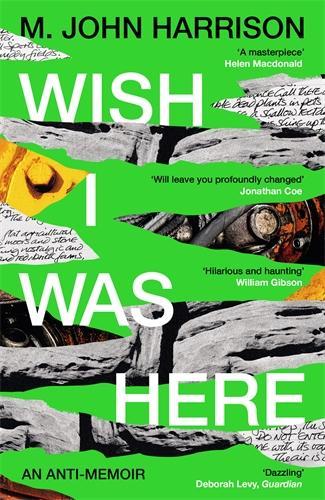
M. John Harrison has been one of the brightest, and often strangest, lights of the British speculative fiction field for decades, since entering the field as a member of the New Wave in the 1960s. In that time, he has moved across genres with abandon, taking in literary, fantasy, science fiction, and even (anti-)memoir, and The End of Everything feels in some ways like a distillation of much of that work: the strange alien presences and objects of the Kefahuchi Tract, the failing and fading Britain so brutally skewered in The Sunken Land Begins To Rise Again, the post-apocalypse and dying world of Viriconium, and the games with form of Wish I Was Here.
The End Of Everything is in some ways a simple novel, about people living after a strange, unexplained (and extended) event has overtaken Britain, rolling into one environmental catastrophe, isolating event, and alien invasion. Harrison focuses on two people, Phillip Tennant, a scavenger on the shoreline for artefacts of both the past and the strange alien presences, and Marnie, an old woman whose memory is fading but who is in some ways stuck in the past. Along the way their complicated relationship is expanded out, as is their relationship with a small number of other characters - the focus here is extremely tight, letting us really get to know the small cast. One of the great strengths of that is what it allows Harrison to do with Marnie's fading memory; we watch her change and her grasp on the past and present go across the course of the novel, in a way told with immense sympathy but also an honest brutality.
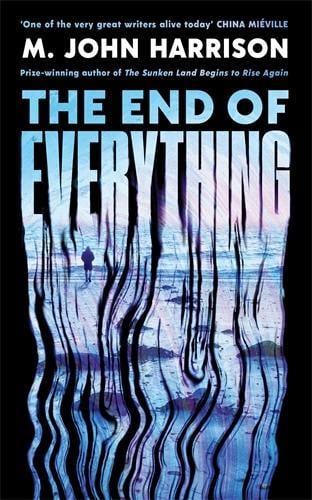
Harrison uses the geographical specificity of the south coast of Britain to draw out both the strangeness and familiarity of his setting; the fading British coastal holiday towns, with slightly crumbling hotels, are vividly evoked and extremely familiar, and Harrison's use of the senses to bring everything to life makes the world feel intensely real. He isn't afraid of politics; there is explicit commentary here ("HOW CAN YOU LOSE A CONTINENT", as Marnie's sign reads, or the recurring references to fleeing by boat), but mostly The End of Everything is evoking, rather than showing, its sense of melancholy, of a past better than the present. It is a beautiful, sad, and deeply strange book, and deserves your time.
Hardback edition
This reviewer received a free of charge product for review.