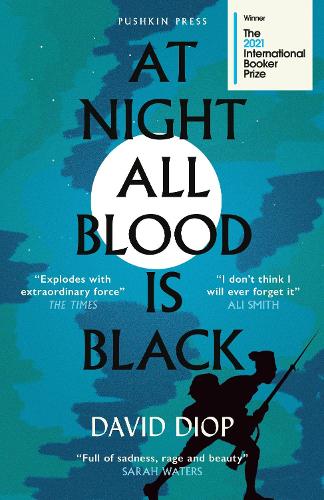
“A harrowing but compelling novel of brotherhood in war”
Longlisted for the 2021 International Booker Prize, one of two books by Pushkin Press – who publish “the world’s best stories, to be read and read again.”.
In 2014 I spent much of the Summer reading non-fiction books around World War I / The Great War – mainly concentrating on the factors that lead to its outbreak, but some covering something of the War as well. One thing that becomes clear if you study the War (but is perhaps a lot less clear from more standard accounts and most fiction on the topic) is the extent of non-white involvement particularly in the British and French armies.
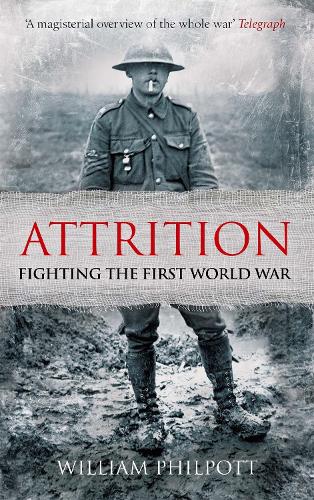
One of the most interesting books I read was “Attrition” by William Phlipott, one of its key themes (from my 2014 review) is that “from very early on it was inevitable that given the current state of technology and the existential nature of the war, the land war would largely be an attritional battle of numbers – destroying or capturing the enemies key war resource (i.e. soldiers) to the extent that they could no longer sustain the battle” One aspect of this was the advantage held by England and France in being able to raise troops from their Empires (for example the Sepoys in the British Army), the book stating that “The availability of imperial manpower resources allowed the Entente states to keep expanding their war efforts after Germany’s had reached its peak”. The book points out that a French General Charles Magnin had argued even pre-war, in an influential treatise, that a French imperial manpower reserve “The Force Noire” should be developed as a counterweight to Germany’s larger population and that as the war progressed the West African battalions became more and more crucial to the French war effort.
And this is a novel about those forces – the “Chocolat” soldiers – and two soldiers in particular: Alfa Ndiaye and his “closer than a brother” friend Mademba Diop. The novel begins with one of its many difficult to read scenes, with Mademba dying slowly in agony in no man’s land, his guts literally in his hands, with Alfa refusing, on what he later realises is mistaken principle, his friends pleas to end his agony by cutting his throat.
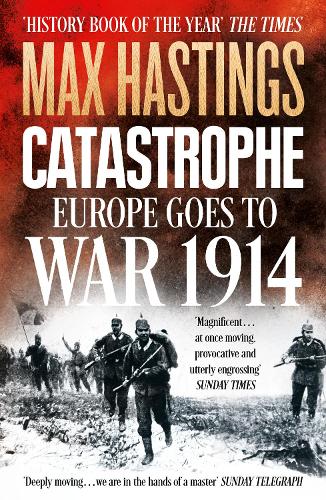
Another history book I read was the popular military historian Max Hastings “Catastrophe: Europe Goes To War 1914”. That book gave much less coverage to the West Africans that fought for the French other than in a rather gratuitous section on war brutality which mention a story of a column of escorted German PoW’s being “beset by Senegalese troops determined to cut off the German’s ears”, before following up with a reference to a French army Chaplin in a field hospital complaining about the lack of civilisation of the West Africans being treated (“while applauding the terror the colonial infantry inspired among the Germans”).
However gratuitous, this story acts as a very close analogy to the subsequent story of Alfa. On the way back to the trenches, carrying Mademba’s body something switches in his mind (what we might now categorise as PTSD) – the first sign he recognises himself is that he suddenly views the trenches in a highly sexualised way; but the more serious consequence is that he takes to hanging back after the retreat is sounded with the aim of hamstringing a German soldier with his machete, dragging him to no-mans land , slicing his belly and then cutting his throat after only a short period as soon as the soldier pleads for release – effectively recreating Mademba’s death with a different ending. Even more gruesomely he cuts the hand from his victim and takes it back with him to the trenches.
At first his savagery and the fear it must strike in the enemy makes him something of a hero, even among the white soldiers, but soon the stench of death he carries makes him a pariah even among his fellow Africans – at which point he is sent to a field hospital for recovery.
There – in what is the real heart of the novel - we learn more of his life in Africa, his mother and father, his relationship to Mademba and his first sexual experience just before his travel to Africa, and a tour de force ending reunites him with Mademba.
Overall this is a harrowing but compelling novel of brotherhood in war (something I think better captured by the French title), very naturally translated by Anna Moschovakis.
Hardback edition
This reviewer received a free of charge product for review.