Stay one step ahead and let us notify you when this item is next available to order.
Enter your email below and we will notify you when this item is next available to order.

Thank you
we will contact you when this item is next available to order
This is a collection of gems from the literature of mathematics that shine as brightly today as when they first appeared in print. They deserve to be seen and admired. The selections include two opposing views on the purpose of mathematics, The Strong Law of Small Numbers, the treatment of calculus in the 1771 Encyclopaedia Britannica, several proofs that the number of legs on a horse is infinite, a deserved refutation of the ridiculous Euler-Diderot anecdote, the real story of pi and the Indiana Legislature, the reason why Theodorus stopped proving that square roots were irrational when he got to the square root of 17, an excerpt from Mathematics Made Difficult; a glimpse into the mind of a calculating prodigy.
There will be something of interest here for almost anyone interested in mathematics. Underwood Dudley is the bestselling author of several MAA books: Mathematical Cranks, Numerology, and the Trisectors. He has an Erdos number of 1.
Publisher: Mathematical Association of America
ISBN: 9780883855669
Number of pages: 340
Dimensions: 226 x 155 x 22 mm
Weight: 564 g
Language: English
A more accurate question to appear as the title would be ""Is All Mathematics Inevitable?"" It is clear that given the development of human-level intelligence some mathematics is inevitable. For example, counting is clearly inevitable and there have been experiments that demonstrate that human babies can count at a very early age and that many animals can perform rudimentary counting. However, it is uncertain whether some of the more abstract areas of mathematics were inevitable, it is a very interesting point of philosophical debate, being rooted in the Greek mathematics of Plato. ""Is Mathematics Inevitable?"" by Nathan Altshiller Court is just one of the articles. The book is a collection of articles about mathematics, the people that pushed it forward and the context in which they lived their lives. All of the papers are expository, while some of the topics are philosophically deep; the level of mathematics never gets to the point where it would overwhelm an intelligent undergraduate that is beyond calculus. ...Some mathematics books are fun to read, this one is fun, nearly always interesting and could be useful as a text in survey or capstone courses."" - Charles Ashbacher, Journal of Recreational Mathematics
 Professor Stewart's Cabinet of Mathematical Curiosities
 Game Theory
 The Signal and the Noise
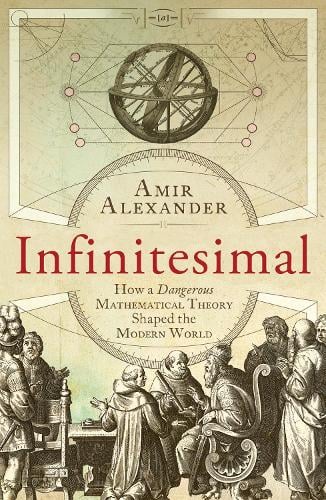 Infinitesimal
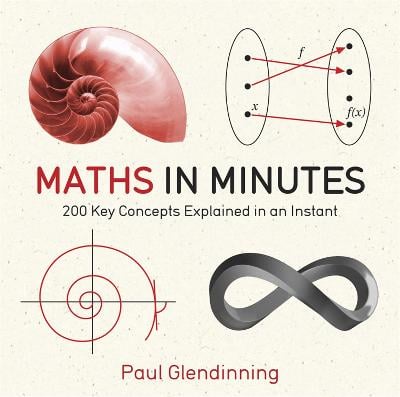 Maths in Minutes
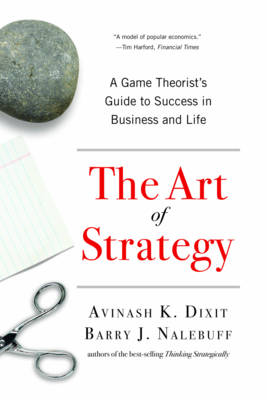 The Art of Strategy
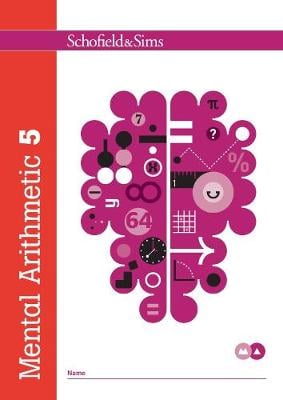 Mental Arithmetic 5
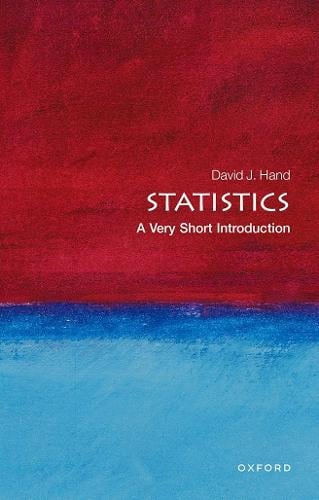 Statistics
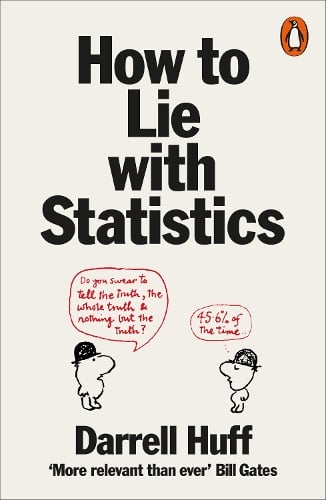 How to Lie with Statistics
 An Introduction to Infectious Disease Modelling
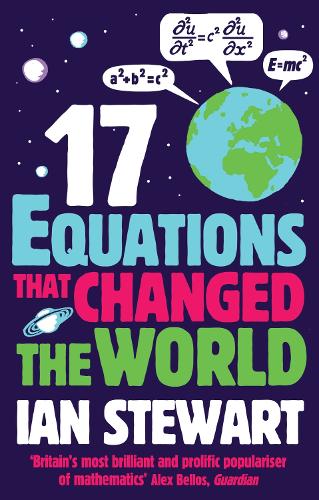 Seventeen Equations that Changed the World
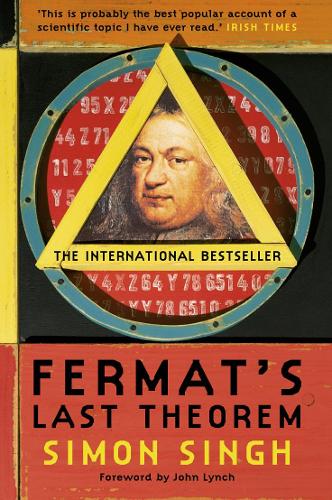 Fermat’s Last Theorem
 Mental Arithmetic 6
 Naked Statistics
 A Mathematician's Apology
Please sign in to write a review
Would you like to proceed to the App store to download the Waterstones App?